
Case study · Zonik AI
Zonik AI — After-Hours Load Tracking SaaS Website
- B2B SaaS
- Web Design
- Next.js
- Framer Motion
- Conversion-focused
After-hours load tracking, explained in 30 seconds.
Project overview
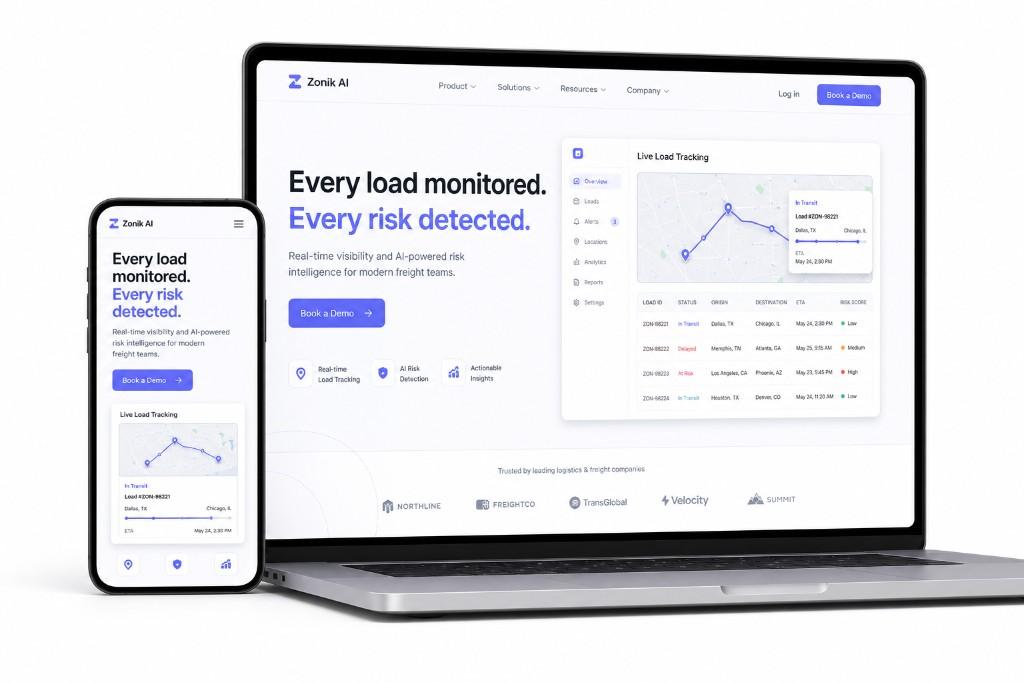
Zonik AI is a B2B SaaS for trucking and freight companies. An AI agent monitors active loads 24/7, tracks GPS, calls drivers with AI voice agents, and alerts the after-hours team only when action is needed.
Marketing website (Home + Contact), static export, deployed on Netlify. Stack: Next.js (App Router), TypeScript, Tailwind CSS v4, Framer Motion.
Zonik needed a site that instantly communicates a complex product to freight dispatchers and ops leaders, not a generic SaaS template. The site had to feel modern, trustworthy, and product-led while driving demo bookings.
12
Home page sections
2
Pages (Home + Contact)
24/7
Monitoring story at the design core
The challenge
- What happens automatically: GPS, risk detection, AI driver calls
- What the team still does: exceptions only, not every load
- Why one operator plus AI can replace a 10-person overnight team
Our approach
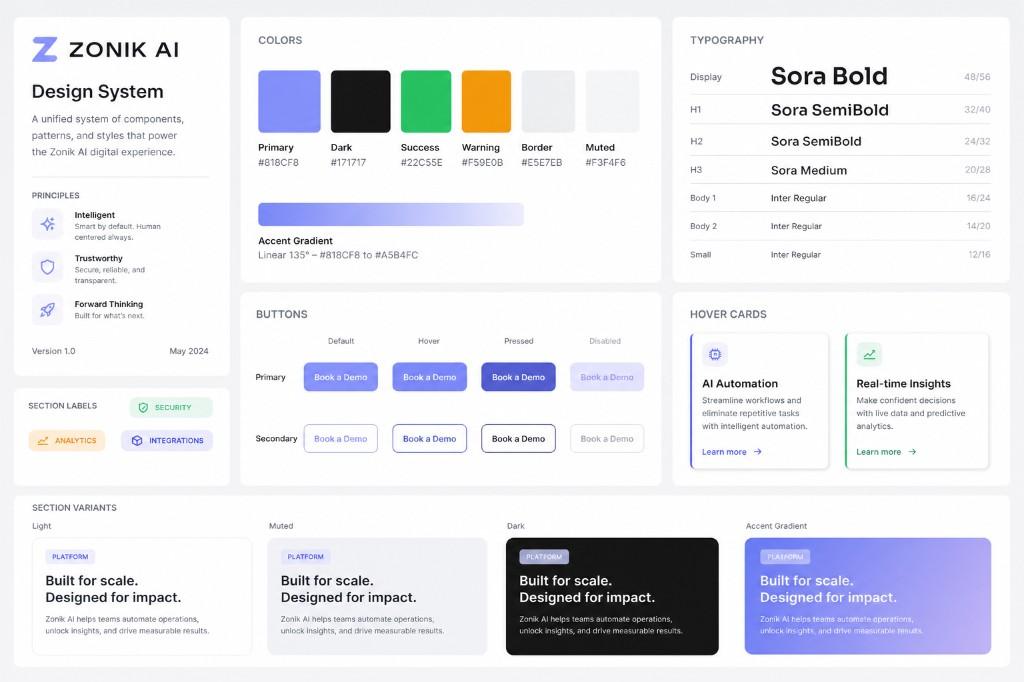
We chose a clean, light, Attio-inspired B2B look instead of dark cyber trucking clichés. A soft periwinkle accent (#818CF8) feels tech-forward but approachable, not an aggressive red/blue logistics palette.
Alternating section backgrounds, tight-tracking headlines, and gradient accent on key phrases create rhythm while scrolling. A reusable design system keeps things consistent without feeling templated.
B2B buyers in freight are skeptical of hype. A calm, precise, product-demo feel builds trust faster than loud marketing.
Design system building blocks:
- SectionShell + SectionHeader
- HoverCard + icon-chip
- card-clean components
- Periwinkle accent (#818CF8)
Product-led hero
The hero was not a slogan wall. Headline: "Every load monitored. Every risk detected. Your AI after-hours tracking agent."
The hero includes a live-feeling dashboard preview: animated ETA countdown, risk badge toggle, voice agent pulse, and alert toast. Visitors immediately see the product, not abstract copy.
Animations with purpose
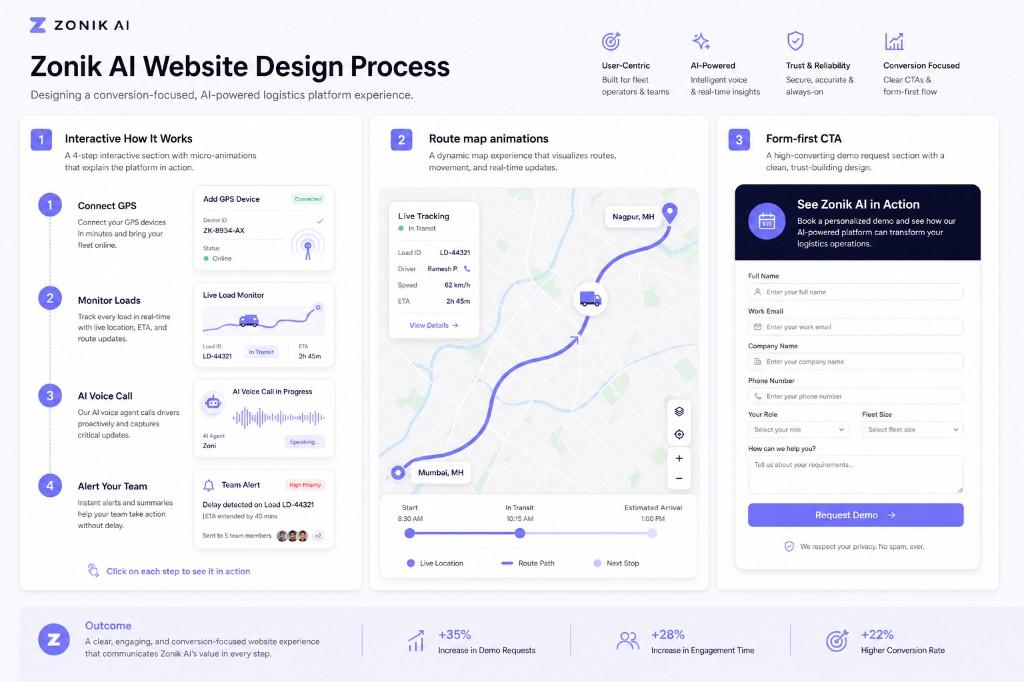
Every animation explains the product, not decoration. Route map: truck follows the GPS path, route draws in real time. The automation pipeline walks visitors through Loads → GPS → AI Monitor → Voice → Dashboard → Alert.
The How It Works storyboard has 4 interactive steps with auto-play and click-to-explore. Animations turn abstract SaaS into an "aha, this is how it works" moment, without heavy video or performance loss on static export.
Form-first CTA
The primary conversion is Book a Demo. We treated the contact page as a landing page: the demo form is the first thing visible in the hero, not buried below the fold.
Clear visual language: dark header bar labeled "Demo request form", "Start here" badge, purple ring and shadow. The form submits to a Make.com webhook. Copy reinforces value across the site: "Your team only steps in when it matters."
Messaging architecture
- Problem, manual overnight tracking pain
- Solution, one operator + AI orchestration
- Proof, GPS, voice agent demo, dashboard, integrations
- How it works, 4 visual steps
- Benefits + FAQ, objection handling
- Final CTA, dark section, demo push
Results
12
Home sections shipped
1
Make.com webhook for demo leads
100%
Mobile-responsive + scroll-animated
Tech stack and deliverables:
- Next.js 16 + TypeScript
- Tailwind CSS v4
- Framer Motion interactions
- Static export → Netlify
- Reusable section system
- Route map SVG animation
- Interactive How It Works showcase
- Pages: / (home), /contact (form-first demo)
Outlook
Takeaway
The goal was not a beautiful trucking website. It was a site that makes a dispatcher think: "This runs overnight for me, and I only wake up for exceptions." Every design choice served that.
Learn more about conversion-focused landing pages and ads
View serviceSome of our clients
























Free consultation
Need more qualified leads?
Book a free consultation and see how we can help your team grow.
- Free
- 30 minutes
- No obligation